The Torah section of Emor (“
Speak”) begins with the special laws pertaining to the
kohanim (“priests”), the
kohen gadol (“high priest”), and the
Temple service: A kohen may not become ritually impure through contact with a
dead body, save on the occasion of the death of a
close relative. A kohen may not marry a divorcee, or a woman with a promiscuous past; a kohen gadol can marry only a virgin. A kohen with a physical
deformity cannot serve in the Holy Temple, nor can a deformed animal be brought as an offering.
A newborn
calf,
lamb or
kid must be left with its mother for seven days before being eligible for an offering; one may not slaughter an animal and its offspring on the same day.
The second part of Emor lists the annual
Callings of Holiness—the festivals of the Jewish calendar: the weekly
Shabbat; the bringing of the Passover offering on 14 Nissan; the seven-day
Passover festival beginning on 15 Nissan; the bringing of the Omer offering from the first barley
harvest on the second day of Passover, and the commencement, on that day, of the 49-day
Counting of the Omer, culminating in the festival of
Shavuot on the fiftieth day; a “remembrance of
shofar blowing” on 1 Tishrei; a solemn
fast day on 10 Tishrei; the Sukkot festival—during which we are to dwell in huts for seven days and take the “Four Kinds”—beginning on
15 Tishrei; and the immediately following holiday of the “eighth day” of Sukkot (
Shemini Atzeret).
Next the Torah discusses the
lighting of the menorah in the Temple, and the
showbread (lechem hapanim) placed weekly on the table there.
Emor concludes with the incident of a man executed for
blasphemy, and the penalties for murder (death) and for injuring one’s fellow or destroying his
property (monetary compensation).



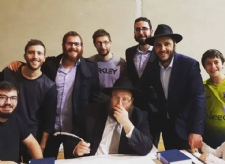 Lag
Bomer was chosen as the day to commence the writting of the new Sefer Torah. Together with my oldest son Menachem Mendel, we flew to Melbourne to be at this spectacular innaguaral event.
Lag
Bomer was chosen as the day to commence the writting of the new Sefer Torah. Together with my oldest son Menachem Mendel, we flew to Melbourne to be at this spectacular innaguaral event. 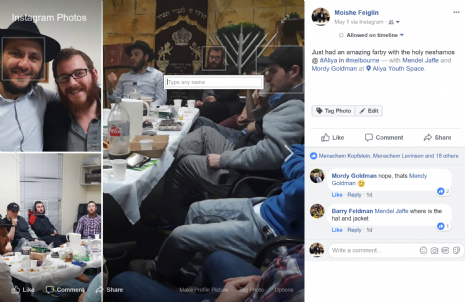 Whilst
in Melbourne I was invited by the most awesome Rabbi Mendel Jaffe to come farbreng at Aliya Melbourne. It was great to hang with them. They're an amazing bunch of guys and Rabbi Jaffe from Manchester is a supper cool Rabbi and the guys totally connect with him.
Whilst
in Melbourne I was invited by the most awesome Rabbi Mendel Jaffe to come farbreng at Aliya Melbourne. It was great to hang with them. They're an amazing bunch of guys and Rabbi Jaffe from Manchester is a supper cool Rabbi and the guys totally connect with him. 


 How could it be that 24000 very learned students of Rabbi Akiva, who was famous for teaching you should love your fellow Jew as yourself, die for lack of respect for one another

